

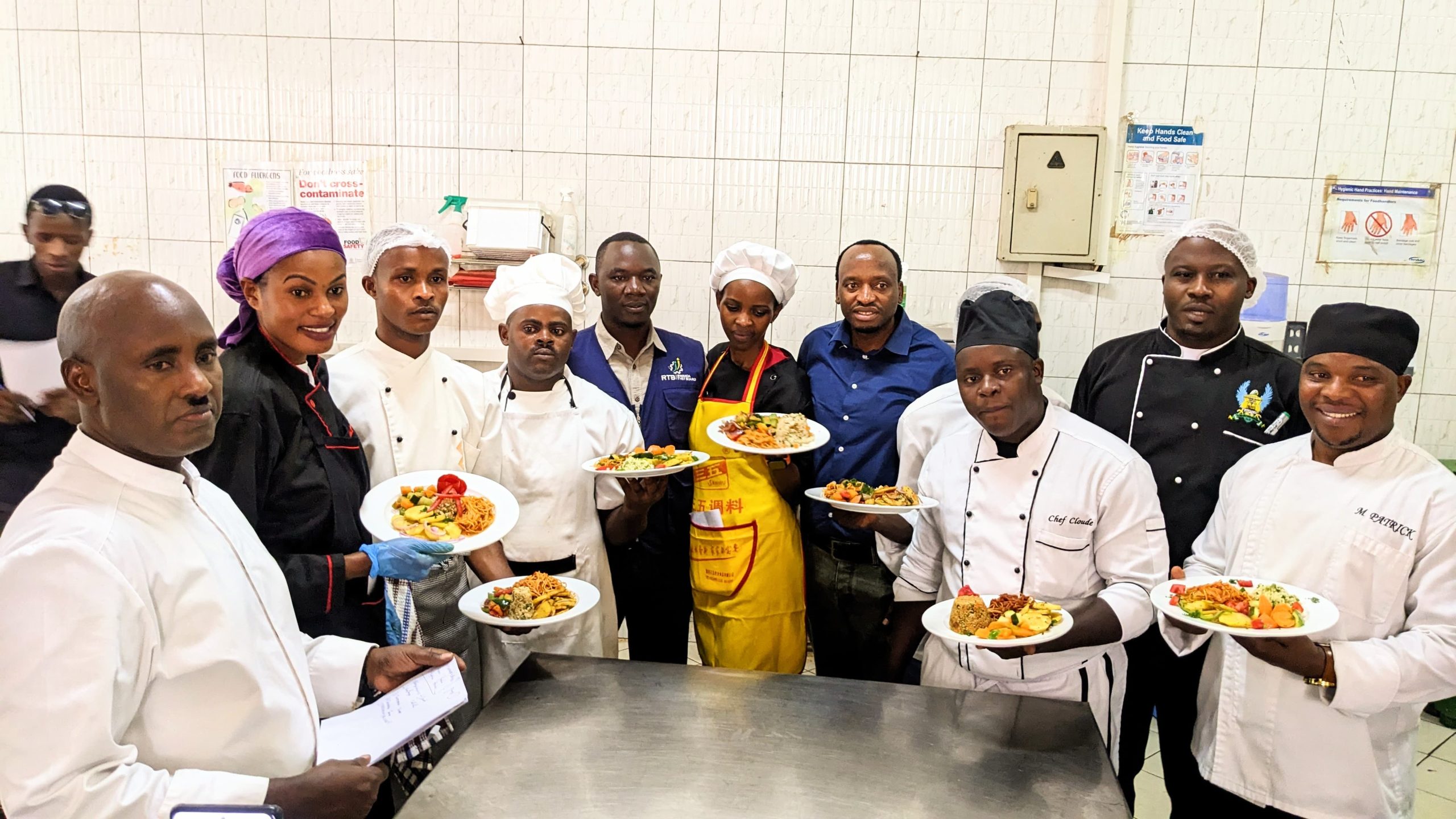
 The East African University of Rwanda (EAUR), in collaboration with the Rwanda TVET Board (RTB), is conducting practical skills assessments for 450 experienced workers in Culinary Arts and Warehouse Management under the Recognition of Prior Learning (RPL) program. The exercise recognizes skills acquired through work experience and enables successful candidates to obtain formal certification of their competencies.
The assessment targets 200 candidates in Culinary Arts and 250 in Warehouse Management, giving experienced workers an opportunity to demonstrate their practical skills and gain formal recognition of their abilities.
Prof. Callixte Kabera, Vice Chancellor of EAUR, explained that the university had secured the contract to assess workers’ competencies in different occupations in collaboration with RTB, technical experts, academic professionals and industry practitioners.
“We secured the contract to assess people’s competencies in different occupations,” Prof. Kabera explained.
The assessment process focuses on candidates’ ability to demonstrate the practical skills required in their respective fields. Assessors observe candidates performing occupational tasks and evaluate their competencies against established standards.
In Culinary Arts, candidates demonstrate their cooking techniques and practical knowledge through meal preparation. In Warehouse Management, the assessments focus on practical competencies related to logistics, storage and warehouse operations.
Eugene Munyanziza, a Hospitality and Tourism Trades Specialist at RTB, explained that the assessment tasks reflect the practical requirements of the candidates’ occupations.
“The candidate carefully studies the task and performs it practically, just as they normally do in their workplace,” he explained.
The initiative supports experienced workers who have acquired practical skills but lack formal certification. Recognized qualifications can help them demonstrate their abilities when applying for jobs, seeking promotions or pursuing other career opportunities.
Munyanziza emphasized the importance of formal recognition in supporting professional development.
“Sometimes, a person may be held back professionally because they do not have formal proof of the skills they possess. Once they obtain this certificate, it can create opportunities for career advancement,” he said.
Through the Recognition of Prior Learning approach, individuals can demonstrate competencies acquired through employment and practical experience. Candidates who meet the assessment requirements receive certificates recognising the skills they have demonstrated.
According to RTB, the two assessment phases conducted in collaboration with EAUR represent 20 per cent of the workers targeted under the wider initiative. The Board aims to extend assessments across the targeted occupations so that more experienced workers can obtain formal certification of their practical skills and strengthen their ability to compete in the labour market.
Beyond the current assessments in Culinary Arts and Warehouse Management, Recognition of Prior Learning can also support the recognition of practical skills in other sectors, including construction, mining and agriculture.
Through its collaboration with RTB and industry professionals, EAUR is helping experienced workers gain formal recognition of competencies acquired through work experience. The initiative supports workforce development and creates opportunities for employment and career advancement.