
East African University Rwanda Scientific Journal (EAURSJ)
Differential Adoption of Climate-Smart Agroforestry Practices across Socioeconomic Household Categories in Bugesera, Rwanda
Donatien Ntawuruhunga1*, Enock Nyisingize1, Marie Therese Mukanyangezi2, Mathias Twahirwa3
1Department of Business Administration, East African University Rwanda, P.O. Box 179, Nyagatare, Rwanda
2 Faculty of Business and Development Studies, Kibogora Polytechnic, P.O. Box 50, Nyamasheke, Rwanda
3 Faculty of Theology and Religious Studies, Protestant Institute of Arts and Social Sciences, P.O. Box 619, Huye, Rwanda
*Correspondence to: Department of Business Administration, East African University Rwanda, P.O. Box 179, Nyagatare, Rwanda. E-mail address: drdonatien@eaur.ac.rw (Donatien Ntawuruhunga), ORCID: https://orcid.org/0000-0002-2945-129X
Abstract
Climate-smart agroforestry (CSAF) offers vital adaptation and livelihood benefits for smallholders, yet adoption rates vary sharply across social strata and environmental landscapes. This study investigated how social differentiation—such as wealth tiers—shapes the uptake of CSAF practices in the semi-arid lowland of Bugesera in Rwanda’s Eastern zone. Based on the survey conducted between April and September 2023, this study assessed how social categories, as defined by Rwanda’s official “Ubudehe” social stratification system, influence the adoption of CSAF practices among rural farmers. We collected data through farm-level interviews and analyzed them using descriptive statistics and logistic regression in Excel and R. Results showed that most respondents were high-income earners, implying that most households and landholders are in the self-reliant category, where members have regular income sources and can comfortably afford all basic household needs. Also, farmers in the Bugesera study area practice CSAF using different approaches for various purposes— home gardens, alley cropping, improved fallow, multipurpose trees, plantation crop combination, shelterbelts/windbreaks, and silvopasture. Additionally, the variance-covariance between “Ubudehe” categories and expected farmer CSAF adoption was positive. These results signify that a positive variance-covariance between specific “Ubudehe” category status (such as low-income earning households) and CSAF adoption moves together with, or increases the likelihood of adopting these farming practices. Finally, the results showed that “Ubudehe” categories do not affect CSAF adoption in the Bugesera study area. The policy implications of this study are that wealth does not necessarily limit or encourage CSAF adoption: programs that distribute trees or training based strictly on “Ubudehe” poverty categories may miss the actual farmers who need or can use them. Agricultural extension services and technical training should also be open to all landholders regardless of their economic bracket, as knowledge gaps affect adoption more than poverty class. Ultimately, subsidies and high-quality tree seedlings should be based on land suitability and farmer readiness rather than socioeconomic status.
Keywords: Climate-smart agroforestry; Adoption; Social stratification; Policy formulation; Logit regression
- Introduction
The world faces a triple crisis of climate change, biodiversity loss, and land degradation that threatens people’s livelihoods and the attainment of the Sustainable Development Goals (SDGs). While agriculture remains the mainstay of Rwanda’s economy (Prasad et al., 2016), it faces mounting pressures from both climatic and non-climatic stressors because of its geographic characterization as highland and lowland semi-arid zones.
Agriculture is crucial to Rwanda’s economic growth and poverty reduction. Climate change poses a major threat to smallholder farmers and rural livelihoods in Rwanda (Chavula, 2025), where economic development relies heavily on rain-fed agriculture. This sector is particularly vulnerable to climate variability and its adverse effects (Abdurahman et al., 2024). As climate change effects worsen, smallholder farmers become increasingly vulnerable (Chavula, 2025) because of low income, limited access to appropriate adaptive technology, and insufficient institutional support. Eastern Rwanda, including Bugesera district, has experienced a significant reduction in agricultural productivity due to climate change.
Despite agriculture’s critical role in local livelihoods, high population density and food scarcity have exerted pressure on land resources. This has led to declining farm sizes and continuous cultivation without fallow periods (Prasad et al., 2016), resulting in soil fertility deterioration and reduced productivity, exacerbating natural resource depletion, contributing to climate change, food insecurity, and poverty. Bugesera District is characterized by a dry climate and relies heavily on rain-fed agriculture, making it highly vulnerable to climate change impacts. Farmers lack resources to adopt the latest technologies, such as expensive irrigation infrastructure, further compounding their vulnerability during droughts. Therefore, adopting CSAF is one solution to address this problem. CSAF is an integrated landscape management strategy that encompasses cropland, livestock, forests, and fisheries for tackling the interconnected issues of food security and climate change (Chavula, 2025). The challenges posed by climate change and its consequences on food security and the environment stand out as among the most critical development hurdles of our times. Projects implemented in Bugesera have been promoting the adoption of trees on farms to tackle climate change, increase household income, and improve food security. Unfortunately, research on smallholder farmers’ adoption of CSAF practices is scant, hindering effective planning, investment, and policy formulation to enhance farmers’ resilience. To promote the adoption and upscaling of CSAF practices among smallholder farmers and enhance sustainable agricultural productivity in the face of climate change, there is a need to assess the level of adoption and identify adoption determinants.
CSAF offers routes for farm resilience. Yet small farmers adopt CSAF unevenly because of social and economic factors. Using Rwanda’s “Ubudehe” stratification system as a core analytic tool clarifies how a family’s money level shapes or limits the spread of sustainable farming ideas. CSAF benefits are clearer when household economics are taken into account. Rwanda’s official socioeconomic framework is the “Ubudehe” stratification system, managed by the Local Administrative Entities Development Agency (LODA), which classifies households by income, assets, and labor capacity.
Despite the effectiveness of CSAF practices in increasing productivity and climate resilience among smallholder farmers, adoption has been suboptimal. Prior initiatives fail to account for socioeconomic disparities within the smallholder farmer community and tend to view it as a homogeneous entity. For instance, “household poverty level (ubudehe)” is an important tool for social stratification in Rwanda. The differential impacts of “ubudehe” on a farmer’s ability, resource availability, and motivations to adopt CSAF are critical issues. Thus, a lack of knowledge about current adoption levels and the impact of different “ubudehe” strata on constraining factors such as the availability of land and labor would be detrimental to policy formulation and would fail to realize sustainable agriculture. However, there is inadequate empirical evidence regarding the differential impacts of “ubudehe” strata on a farmer’s ability, resource availability, and motivations to adopt CSAF.
Smallholder farmers struggle to use CSAF practices effectively (Ntawuruhunga et al., 2025a). For CSAF to be successful and sustainable, farmers should understand its benefits. Hence, a knowledge gap, as past studies ignore how “Ubudehe” categories shape access to farming resources, particularly CSAF, and there is a lack of clear data on how different household categories adopt these practices in Bugesera. In extension, decision-makers lack data on how household wealth status affects farming choices. This study aims to analyze how socioeconomic status influences the adoption of CSAF practices among farming households in Bugesera, Rwanda. Specific objectives: (i) to compare adoption rates across different household socioeconomic categories; (ii) to identify specific socioeconomic barriers and facilitators to CSAF implementation; and (iii) to inform targeted policy interventions for climate-resilient agriculture in Bugesera.
To promote CSAF in Rwanda’s landscapes and boost farm productivity, we must measure how many smallholder farmers use CSAF practices and find out what stops or helps them. This study will help understand how Rwanda’s official “Ubudehe” social stratification system specifically influences these adoption rates.
- Theoretical framework
This study requires a conceptual framework to understand how CSAF is adopted differently across households’ socio-economic strata in the semi-arid, drought-prone area of Bugesera in Rwanda. The best strategy would be to combine the “Sustainable Livelihoods Framework (SLF)” with the “Diffusion of Innovations Theory (DIT)”, the “Agricultural Household Models (AHMs)”, and the Behavioral and Risk Frameworks (BRFs).
Initially proposed by the Department for International Development (DFID), the SLF (Natarajan et al., 2022) is the framework that allows analysis of how people from various socioeconomic groups use resources and react to climate stress.
- Livelihood Assets (The Capital Pentagram): Explains differences in adoption based on household capabilities:
- Human Capital: Household size, labor availability for labor-intensive agroforestry, and education/training in climate-smart agriculture.
- Natural Capital: Farm size, soil fertility, and secure land rights (important for making investments like growing trees).
- Financial Capital: Off-farm income, access to credit, and savings to buy seedlings or cover the gestation period till the trees bear fruit.
- Social Capital: Being part of farmer cooperatives or traditional mutual assistance systems (ubudehe) that help share knowledge and seeds.
- Physical Capital: Access to water harvesting technologies, farming tools, and market roads.
- Vulnerability Context: Creates the specific conditions in Bugesera, including droughts, unpredictable rainfall, and soil degradation, forcing people to become resilient.
- Transforming Structures and Processes: Examines how institutional support (such as Rwanda’s green growth policy or NGO actions) affects people from various socioeconomic groups.
The Diffusion of Innovations (DIT) model (García-avilés, 2020) describes how and why technology diffuses among people within a community by defining farmer segments according to their tendency to embrace innovations.
- Adopter Types: Wealthy families who own land securely in Bugesera could be Innovators or Early Adopters. On the other hand, poor and conservative households would be Late Majority and Laggards due to no buffer against failure.
- Perceived Attributes of Innovation: The way households view agroforestry based on:
- Relative Advantage: Would the tree yield better returns than other seasonal crops during a drought?
- Compatibility: Would the tree type conflict with present crop arrangement and practices?
- Complexity and Trialability: Can a poor farmer try it on a small scale without risking his whole food security?
The Agricultural Households’ Models (AHM) (Squire & Jof, 1986): In Rwanda, smallholder farmers act both as consuming households and producing firms within the same time frame. The model explains the dynamics beyond the market economy.
- Non-Separation of Consumption and Production: Choosing CSAF among households in semi-arid areas depends heavily on consumption motives (such as firewood, fodder, and food security), rather than production motives.
- Labor Choice Issues: CSAF is relatively labor-intensive in the beginning.
Behavioral and Risk Frameworks (BRFs) (Tversky, 1979):
- Climate-related Risk Preferences: In situations where farmers are extremely vulnerable to climatic effects (such as in Bugesera), they exhibit loss aversion. Households with very few resources might not adopt CSAF because they cannot risk losing their crops due to competition for scarce water from trees and crops.
- Materials and methods
3.1. Study area
Rwanda is a landlocked country in East Africa with a rural economy (Ntawuruhunga et al., 2024). Its fundamental challenge (Republic of Rwanda, 2023) is a rapidly growing population on fragile and eroding land, exacerbated by climate change risks. The study focused on the Bugesera agroecological zone in the eastern semi-arid savannah lowland zone.
The lowland Bugesera is part of the eastern savannah semi-arid area between Latitude 1037’56” S and 2013’9” S and Longitude 29021’0” E and 30018’0” E. It has a surface area of 1337 square kilometers. The registered annual average temperature is between 26 and 290C. Its landscapes vary from 1,100 to 1,780 meters above sea level. Its annual precipitation varies between 700–1100 mm. Bugesera is part of the drier plains in eastern Rwanda, covered with savannah grasslands and scattered woody trees, notably acacia (Figure 1).
This area was purposively sampled based on its agroclimatic conditions and the farming practices inherent to it. In Bugesera, soil fertility is depleted of major nutrients due to overexploitation, decreased organic matter, and high acidity (Mukashema et al., 2022). In Bugesera, agriculture is mostly rain-fed and subject to the caprices of meteorological patterns (Rwanyiziri and Rugema, 2013). Although endowed with abundant lakes, water is scarce for farming due to a lack of irrigation infrastructure and equipment to support needy farmers, especially in the dry season. Consequently, smallholder farmers have little means to increase productivity and shift out of poverty (ibid.). Climate change and concomitant trends in climate variability make agricultural production in this region unpredictable from one season to season. Droughts and extreme temperatures plague this area (Ntawuruhunga et al., 2024).
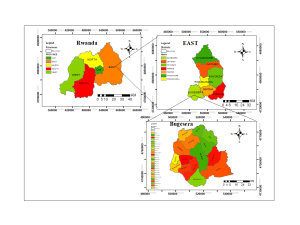
Figure 1. Map of Rwanda with study areas (Bugesera and Rulindo) (adapted from CGIS)
3.2. Sampling and data collection
This study applied a multi-stage sampling procedure combining purposive and simple random sampling techniques. In the first stage, the study area described above was purposively selected based on its specific agroecological characteristics. In the second stage, we selected all the sectors (sub-administrative entities) from Bugesera District. Then, in the third stage, we randomly selected 24 cells from each sector using stratified sampling. In this context, a cell serves as the fourth-level subdivision of Rwanda’s local administrative structure(Ntawuruhunga et al., 2025b). One cell may comprise several villages. In the fourth stage, fifty-eight to fifty-nine villages were randomly selected from each cell in Bugesera, using the Rwanda village statistics (NISR, 2023). In the last stage (the fifth stage), using the lists established by village leaders, we randomly selected three to four households from each village with no reference to farm characteristics. Using the Wonnacott and Wonnacott (1969) formula, we obtained a sample of 193. We interviewed 193 farmers in Bugesera, drawn from the data published in the Rwanda Agricultural Household Survey Report 2020 (NISR, 2021). Before the study began, we pre-tested the questionnaire to improve survey quality and avoid omitting important information necessary to achieve our research objectives. The original questionnaire was built in the Open Data Kit (ODK) software and uploaded to an Android mobile device (tablet) using the ODK Collect application.
We interviewed household heads using a semi-structured questionnaire. In addition, we conducted three focus group discussions (FGDs) with 8–12 participants. The discussion sessions focused on understanding how “Ubudehe” categories shape access to farming resources, practices, and adoption of CSAF. We also interviewed local government (districts) and model farmers to complement our findings. We conducted two interviews with local officials (districts) and two model farmers. We contacted these officials to acquire an overview of CSAF practices in the study areas. We also gathered secondary data to complete the findings of this research.
3.3. Data analysis
This paper analyzed the data using descriptive and inferential statistics in Microsoft Excel and R software (Tokede et al., 2020). We applied descriptive statistics, covariance, and regression analyses. We used descriptive statistics to calculate frequency distributions and percentages to describe the respondents’ demographics and CSAF practice status and to determine the “Ubudehe” category status among the respondents. We also used inferential statistics. We used a binomial regression model to test the association between “Ubudehe” categories and CSAF adoption.
3.4. Model specification for “Ubudehe” categories on the adoption of CSAF
3.4.1. Correlation analysis
Pearson correlation coefficients were estimated to ascertain the relationships between gender characteristics and CSAF adoption. Correlations between variables were computed using the formula of Khanal (2015):
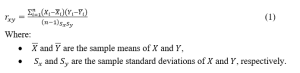
Where:
- and are the sample means of and ,
- and are the sample standard deviations of and , respectively.
3.4.2. Regression analysis
We used a logistic regression model (Kabirigi et al., 2023), termed “logit,” to ascertain how predictor variables (independent) influence the outcome variable (dependent). According to Sperandei (2014), logit regression analysis calculates a statistic (odds ratio) that estimates how changes observed in the dependent variable (binary outcomes) are associated with changes in predictor variables. In this study, the outcome variable was CSAF adoption (1 = adopting or 0 = not adopting). The input variable was farmers’ “Ubudehe” categories. The outcome variable ― the adoption of CSAF ― depicts heterogeneity in adoption among CSAF farmers (Kabirigi et al., 2023). The nature of the outcome variable informed the type of regression we had to perform (Ntawuruhunga et al., 2025a), and the data dictated logistic regression. A logit regression can be binomial, ordinal, or multinomial (Kabirigi et al., 2023). Given that the data in this study show that CSAF adoption is a binary outcome, the analysis used binomial logistic regression. Consequently, we coded the outcome variables as “1” and “0” (1 = adopting, 0 = not adopting). We chose this coding because it provides the most straightforward interpretation of results. This approach enables quantification of model parameter perturbations that affect the probability of a certain binary outcome occurrence (Morotti and Grandi, 2017). Employing the response variable “adopt CSAF”, the regression model is depicted as follows:
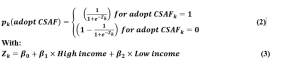
Ceteris paribus, the parameter represents the expected average change in the response variable for a one-unit change in the explanatory variable. Therefore, we model CSAF adoption as a function of “ubudehe” category status.
Odds ratios are computed to report the strength of association between an event (response variable) and one or more input variables (predictor variables) (Kabirigi et al., 2023). The formula (Muhamadi and Boz, 2021) was used to compute the odds ratios for all predictor variables:
(4)
We transformed results into odds ratios (OR) reflecting the increase or decrease in odds associated ― ceteris paribus ― with the influence change of the explanatory variable (Norton et al., 2018). Its interpretation is that, all other predictor variables being held constant, how many times the likelihood for the farmer with a high level of CSAF adoption increases for a single predictor when the predictor is increased by one unit. Of note, odds ratios measure how strongly an outcome is associated with its predictor. These measures have been extensively used in research to analyze and interpret results from logistic regression models (Ohlmacher and Davis, 2003; Sprince et al., 2003; Jasinski et al., 2005; Rautiainen et al., 2009; McDonald, 2014).
We used one explanatory variable, “ubudehe” categories, in this study for the binary logistic regression model. Various techniques are used to select variables that fit the model (Ntawuruhunga et al., 2025a). They include a stepwise approach that combines forward selection and backward elimination of predictor variables to be added or removed statistically, without disturbing the model’s prediction accuracy (Hosmer and Lemeshow, 2000). The reference group was the low-income category.
- Results
4.1. Characteristics of sampled participants by “Ubudehe” category and CSAF adoption
Table 2 illustrates the number of participants in this study. Results show that most participants were in the high-income “ubudehe” category (63.21%). Conversely, most participants did not adopt CSAF practices (62.44%).
Table 1. “Ubudehe” categories and CSAF adoption among participants
| Variables | Bugesera (n = 193) |
| High-income | 122 (63.21%) |
| Low-income | 71 (38.79%) |
| Adopters | 86 (44.56%) |
| Non adopters | 107(62.44%) |
4.2. CSAF adoption patterns
Table 3 shows that farmer households in the study area practice CSAF on farms using various techniques — home gardens, alley cropping, improved fallow, multipurpose trees, plantation-crop combination, shelterbelts/windbreaks, and silvopasture. Results showed that 37.31% of farmer households in Bugesera adopted home garden CSAF practices. In contrast, a small fraction (1.04%) of farmers adopted alley cropping as a CSAF practice. This suggests that alley cropping is less prevalent in the study area.
Table 2. Distribution of CSAF practices in the study area
| CSAF practices | Bugesera (n = 193) |
| Taungya | – |
| Home gardens | 72 (37.31%) |
| Alley cropping | 2 (1.04%) |
| Improved fallow | 43 (22.28%) |
| Multipurpose trees | 34 (17.61%) |
| Plantation crop combination | 11(5.70%) |
| Shelterbelts/Windbreaks | 23 (11.92%) |
| Silvopasture | 8 (4.14%) |
| Total | 193 (100.00%) |
4.3. Variance-covariance of “Ubudehe” categories with expected farmer CSAF adoption
Variance-covariance of “Ubudehe” categories with expected farmer CSAF adoption showed a positive covariance (0.003319301). A positive variance-covariance between specific “Ubudehe” categories (such as low-income/high-income household categories) and CSA adoption indicates that certain “Ubudehe” categories move together with or increase the likelihood of adopting these farming practices (Table 3).
Table 3. Variance-covariance of “Ubudehe” categories with expected farmer CSAF adoption
| Variable | “Ubudehe” categories | Adoption |
| “Ubudehe” categories | 0.233754318 | 0.003319301 |
| Adoption | 0.003319301 | 0.248326857 |
4.3. Effect of “Ubudehe” categories on CSAF adoption in study areas
We used a binary logistic regression model to assess the effects of “Ubudehe” categories on CSAF adoption (Table 4). Using a predetermined 5% significance level, the results showed that “Ubudehe” categories do not influence CSAF adoption in the study area.
Table 4. Summarized logistic regression analysis results
| Significant predictors | OR | SE | Z | P>|z| |
| Intercept | 0.775 | 0.239 | -1.065 | 0.287 |
| “Ubudehe” categories | 1.059 | 0.300 | 0.191 | 0.848 |
OR = odd ratio, SE = standard error
*significant at 0.05
- Discussion
This study analyzed how social categories, as defined by Rwanda’s official “Ubudehe” social stratification system, affect the adoption of CSAF practices among rural farmers. As outlined in the introduction, climate-smart agroforestry (CSAF) offers pathways to farm resilience, yet small farmers adopt CSAF unevenly because of social and economic factors. Using Rwanda’s “Ubudehe” stratification system as a core analytic tool clarifies how a family’s income level shapes or limits the spread of sustainable farming ideas. CSAF benefits are clearer when household economics are taken into account. Thus, a lack of knowledge about current adoption levels and the impact of different “ubudehe” strata on constraining factors such as the availability of land and labor would be detrimental to policy formulation and would fail to realize sustainable agriculture. To promote CSAF in Rwanda’s landscapes and boost farm productivity, we must measure how many smallholder farmers use CSAF practices and find out what stops or helps them. In this perspective, this study analyzed how socioeconomic status influences the adoption of CSAF practices among farming households in Bugesera, Rwanda. We recorded farmers’ CSAF adoption indicators as binary outcomes. We used a logistic regression model to determine how socioeconomic status (such as “Ubudehe” categories) influences CSAF adoption in the Bugesera study area.
5.1. Characterization of surveyed farmer households
Results showed that most respondents were high-income earners (63.21%), implying that most households and landholders are in the self-reliant category, where members have regular income sources and can comfortably afford all basic household needs (they do not rely on standard state social protection support). Accordingly, knowing the “Ubudehe” category status of landowners, farming practices, and adoption of the latest techniques in the context of a fast-growing population and climate change is important for identifying what stops or helps them in farming and how differential adoption of CSAF affects agricultural productivity and rural livelihoods.
5.2. CSAF adoption and variance-covariance analysis
Results showed that farmers in the Bugesera study area practice CSAF with different methods for various purposes — home gardens, alley cropping, improved fallow, multipurpose trees, plantation-crop-combination, shelterbelts/windbreaks, and silvopasture (Ntawuruhunga et al., 2025b). These sustainable farming approaches can significantly benefit farmers by boosting crop yields, increasing income, improving food security, and sustaining rural livelihoods (Buyinza et al., 2020). The variance-covariance between “Ubudehe” categories and expected farmer CSAF adoption was positive (0.003319301). These results indicate that a positive variance-covariance between specific “Ubudehe” category status (such as low-income earning households) and CSAF adoption moves together with or increases the likelihood of adopting these farming practices. From this perspective, the policy design and implementation of CSAF programs and policies should consider “Ubudehe” categories to improve farmers’ adoption of crop-tree integration on farms and reduce climate risks.
5.3. Effect of “Ubudehe” categories on CSAF adoption
The results showed that “Ubudehe” categories do not affect CSAF adoption in the Bugesera study area. In contrast, Kaua (2020) found that people with higher income adopt CSAF practice better than those with lower incomes. These findings may be explained by the fact that higher income means farmers can afford to incur more risk. Consequently, they are more likely to adopt new technologies. By extension, research on CSAF shows that while disparities in income sources broadly exist, certain practices and specific study contexts reveal that specific socioeconomic characteristics (such as the “Ubudehe” social stratification system) do not significantly affect the adoption of particular farming techniques.
- Conclusion
In a small, rapidly growing population with fragile and eroding land, exacerbated by climate change risks, small-scale farming involving climate-smart agroforestry (CSAF) is a viable strategy to sustain ecosystems and a mechanism to tackle poverty in rural areas. Despite the effectiveness of CSAF practices in increasing productivity and climate resilience among smallholder farmers, adoption has been suboptimal. Prior initiatives fail to account for socioeconomic disparities within the smallholder farmer community and tend to view it as a homogeneous entity. For instance, “household poverty level (Ubudehe)” is an important tool for social stratification in Rwanda. The differential impacts of “Ubudehe” on a farmer’s ability, resource availability, and motivations to adopt CSAF are critical issues. By adopting CSAF on farms, farmers can reap direct benefits regarding food and cash income, and receive considerable indirect environmental returns. To understand how “household poverty level (Ubudehe)” influences farmers’ adoption of CSAF practices, we used a logistic regression model.
Results showed that most respondents were high-income earners, implying that most households and landholders are in the self-reliant category, where members have regular income sources and can comfortably afford all basic household needs. Also, farmers in the Bugesera study area practice CSAF using different approaches for various purposes— home gardens, alley cropping, improved fallow, multipurpose trees, plantation crop combination, shelterbelts/windbreaks, and silvopasture. Additionally, the variance-covariance between “Ubudehe” categories and expected farmer CSAF adoption was positive (0.003319301). These results suggest that a positive variance-covariance between specific “Ubudehe” category status (such as low-income earning households) and CSAF adoption moves together with, or increases the likelihood of adopting these farming practices. Finally, the results showed that “Ubudehe” categories do not affect CSAF adoption in the Bugesera study area.
The policy implications of this study are that wealth does not necessarily limit or encourage CSAF adoption: programs that distribute trees or training based strictly on “Ubudehe” poverty categories may miss the actual farmers who need or can use them. Agricultural extension services and technical training should also be open to all landholders regardless of their economic bracket, as knowledge gaps affect adoption more than poverty class. Ultimately, subsidies and high-quality tree seedlings should be based on land suitability and farmer readiness rather than socioeconomic status.
Funding
This research did not receive any specific grant from funding agencies in the public, commercial, or not-for-profit sectors.
Declaration of Interest
The authors declare that they have no known competing financial interests or personal relationships that could have appeared to influence the work reported in this paper.
Data Availability
Data will be made available on request.
Ethics statement
Approvals from district mayors were received before fieldwork was undertaken, and informed consent was obtained from all participants in the study. All information was confidential and used for research purposes only. Anonymity was maintained using coded identifiers during analysis to guarantee all personal information would stay private.
Acknowledgments
The authors acknowledge the support from local leaders in Bugesera District who permitted this study to be carried out in their jurisdiction, the district agronomist, extension workers, and farmers who spared their time to participate.
References
Abdurahman, A. M., Feyissa, S., Aschalew, A., & Chavula, P. (2024). Effect of soil and water conservation practices and slope gradient on organic carbon stocks and micronutrients : A case study on Kulkullessa sub-watershed, Eastern Ethiopia. Nova Geodesia, 4, 1–13.
Buyinza, J., Nuberg, I.K., Muthuri, C.W., Denton, M. D. (2020). Assessing smallholder farmers’ motivation to adopt agroforestry using a multi-group structural equation modeling approach. Agroforestry Systems, 94, 2199–2211. https://doi.org/https://doi.org/10.1007/s10457-020-00541-2
Chavula, P. (2025). DETERMINANTS OF CLIMATE-SMART AGRICULTURAL PRACTICES ADOPTION AMONG SMALLHOLDER FARMERS IN BUGESERA DISTRICT, RWANDA. Problems of Agricultural Economics, 382(1), 108–132. https://doi.org/https:doi/org/10.30858/zer/194134
García-avilés, J. A. (2020). Diffusion of Innovation. The International Encyclopedia of Media Psychology. https://doi.org/10.1002/9781119011071.iemp0137
Hosmer, D.W., Lemeshow, S. (2000). Applied Logistic Regression (2nd Edition). John Wiley & Sons, Inc. https://doi.org/10.1002/0471722146
Jasinski, E., Morton, D., DeFries, R., Shimabukuro, Y., Anderson, L., Hansen, M. (2005). Physical Landscape Correlates of the Expansion of Mechanized Agriculture in Mato Grosso, Brazil. Earth Interactions, 9(16), 1–18. https://doi.org/10.1175/EI143.1
Kabirigi, M., Sekabira, H., Sun, Z., Hermans, F. (2023). The use of mobile phones and the heterogeneity of banana farmers in Rwanda. Environment, Development and Sustainability, 25, 5315–5335. https://doi.org/https://doi.org/10.1007/s10668-022-02268-9
Kaua, C. G. (2020). East African Journal of Forestry & Agroforestry Socio-economic Factors Affecting Adoption of Agroforestry Practices in Forest Adjacent Communities : The Case of Ndabibi Location, Nakuru. East African Journal of Forestry and Agroforestry, 2(1). https://doi.org/10.37284/eajfa.2.1.143.IEEE
Khanal, B. (2015). Correlation of climatic factors with cereal crop yield: a study from historical data of Morang district, Nepal. The Journal of Agriculture and Environment, 16. https://doi.org/https://doi.org/10.3126/aej.v16i0.19837
McDonald, J. H. (2014). Handbook of Biological Statistics (3rd ed.). Sparky House Publishing. McDonald, J. H. Handbook of biological statistics
Morotti, S., Grandi, E. (2017). Logistic regression analysis of populations of electrophysiological models to assess proarrhythmic risk. MethodsX, 4, 25–34.
Muhamadi, S., Boz, I. (2021). Determinants of Rulindo tea farmers’ perception towards organic farming: a MASS::stepAIC() approach. Ciência Rural, 51(6), e20200695.
Mukashema, A., Ngoga, T. G., Nyandwi, E., Kanobana, M., Sihimbiro, F., Coroner, S. (2022). Spatial Distribution of Agricultural Land, Soil Fertility and Crop Suitability for Bugesera District. Technical report.
Natarajan, N., Newsham, A., Rigg, J., & Suhardiman, D. (2022). A sustainable livelihoods framework for the 21st century. World Development, 155, 105898. https://doi.org/10.1016/j.worlddev.2022.105898
NISR. (2021). Agricultural Household Survey 2020.
NISR. (2023). 5th Population and Housing Census. National Institute of Statistics of Rwanda. https://www.dosm.gov.my/v1/index.php?r=column/cone&menu_id=bDA2VkxRSU40STcxdkZ4OGJ0c1ZVdz09
Norton, E.C., Dowd, B.E., Maciejewski, M. L. (2018). Odds Ratios-Current Best Practice and Use. Jama, 320(1), 84–85. https://doi.org/10.1001/jama.2018.6971
Ntawuruhunga, D., Ngowi, E.E., Mangi, H.O., Salanga, R.J., Leonard, K. (2024). Assessing climate‑smart agroforestry practices: a study of tree species composition, distribution, and utilities in two contrasting agroecosystems of Rwanda. Agroforestry Systems, 98, 2913–2932. https://doi.org/https://doi.org/10.1007/s10457-024-01063-x
Ntawuruhunga, D., Estomii, E., Omari, H., John, R., & Lynch, K. (2025a). Farmers’ knowledge, attitude, and motivation for adoption of climate-smart agroforestry in two contrasting agroecosystems of Rwanda. Trees, Forests and People, 19(December 2024), 100766. https://doi.org/10.1016/j.tfp.2024.100766
Ntawuruhunga, D., Estomii, E., Omari, H., John, R., & Lynch, K. (2025b). Impacts of climate-smart agroforestry practices on income and food security in two Rwandan agroecosystems. Scientific African, 29(June), e02785. https://doi.org/10.1016/j.sciaf.2025.e02785
Ohlmacher, G.C., Davis, J. C. (2003). Using multiple logistic regression and GIS technology to predict landslide hazard in northeast Kansas, USA. Engineering Geology, 69(3–4), 331–343. https://doi.org/https://doi.org/10.1016/S0013-7952(03)00069-3
Prasad, P. V. V, Hijmans, R. J., Pierzynski, G. M., & Middendorf, J. B. (2016). Climate Smart Agriculture and Sustainable Intensification : Assessment and Priority Setting for Rwanda Final Report : January 2016 (Issue January).
Rautiainen, R.H., Ledolter, J., Donham, K.J., Ohsfeldt, R.L., Zwerling, C. (2009). Risk factors for serious injury in Finnish agriculture. American Journal of Industrial Medicine, 52(5), 419–428. https://doi.org/https://doi.org/10.1002/ajim.20688
Republic of Rwanda. (2023). Gross Domestic Product – 2022. https://doi.org/10.1787/factbook-2010-97-en
Rwanyiziri, G., Rugema, J. (2013). Climate change effects on food security in Rwanda: Case study of wetland rice production in Bugesera District. Rwanda Journal, 1(1), 35–51.
Sperandei, S. (2014). Understanding logistic regression analysis. Biochemia Medica, 24(1), 12–18.
Sprince, N.L., Zwerling, C., Lynch, C.F., Whitten, P.S., Thu, K., Logsden-Sackett, N., Burmeister, L.F., Sandler, D.P., Alavanja, M. C. R. (2003). Risk factors for agricultural injury: a case-control analysis of Iowa farmers in the Agricultural Health Study. Journal of Agricultural Safety and Health, 9(1), 5–18. https://doi.org/10.13031/2013.12346.
Squire, L. Y. N., & Jof, L. (1986). AGRICULTURAL HOUSEHOLDS: Extensions, Applications, and Policy (J. Inderjit Singh, Squire, Lyn, Strauss (ed.)). World Bank.
Tokede, A.M., Banjo, A.A, Ahmad, A.O, Fatoki, O.A, Akanni, O. F. (2020). Farmers ’ Knowledge and Attitude towards the Adoption of Agroforestry Practices in Akinyele Local Government Area, Ibadan, Nigeria. Journal of Applied Sciences and Environmental Management, 24(10), 1775–1780. https://doi.org/10.4314/jasem.v24i10.10
Tversky, D. K. and A. (1979). PROSPECT THEORY: AN ANALYSIS OF DECISION UNDER RISK. E C O N OMETRICA, 47(2), 263–291.
Wonnacott, T. H., Wonnacott, R. J. (1969). Introductory Statistics (5th Edition). John Wiley & Sons, Inc.