
Craftsmanship in Rwanda: Preserving Tradition, Promoting Innovation, and Integrating into the Global Market
Dr. Gamariel Mbonimana – East African University, Rwanda
Abstract
Craftsmanship in Rwanda represents a vital aspect of cultural heritage, social cohesion, and socio-economic development. Traditional crafts, including agaseke baskets, imigongo art, wood carvings, pottery, and handmade jewelry, are deeply embedded in local communities and passed down through generations. Recent innovations, digital tools, and globalization have provided opportunities to modernize craft enterprises, increase income, and promote Rwanda internationally. This paper examines the current state of crafts in Rwanda, their social and economic roles, modernization efforts, and potential for integration into global markets. Data were collected through field studies, interviews with artisans, and analysis of government policies supporting crafts.
Keywords: Rwandan crafts, cultural heritage, innovation, economic development, digital transformation.
- Introduction
Rwandan crafts have historically played a crucial role in cultural identity and community cohesion. Examples such as agaseke baskets, pottery, imigongo art, wood carvings, and jewelry serve both functional and symbolic purposes. These crafts face challenges such as limited market access, low digital integration, and undervaluation in the modern economy.
This paper highlights the importance of Rwandan craftsmanship, explores its socio-economic impact, and presents strategies for modernization and international integration, aligning with the CILRAID 2026 theme of tradition, innovation, and digital transformation.
- Craft as a Social and Economic Element in Rwanda
2.1 Social Dimension
Crafts are taught traditionally through family and community systems, strengthening intergenerational bonds and social capital. Women are central in sustaining knowledge, especially in weaving, basketry, and pottery. Crafts are tied to rituals, ceremonies, and symbolic communication, reinforcing cultural identity.
Examples:
- Agaseke baskets: Symbol of peace and community.
- Imigongo cow-dung art: Represents geometric patterns and heritage from Eastern Rwanda.
- Wood carvings and jewelry: Tell local stories, depict traditional ceremonies, and reflect societal roles.
2.2 Economic Dimension
Rwandan crafts contribute to livelihoods, especially in rural areas. Tourism, local markets, and international exports have expanded opportunities.
Examples of craft-driven economic impact:
- Agaseke baskets and jewelry are exported to Europe and the U.S., providing income for women cooperatives.
- Imigongo panels and modernized ceramics attract collectors and tourists.
- Wood carvings are sold through galleries, cultural villages, and e-commerce platforms.
Challenges:
- Low mechanization and limited production scale.
- Inconsistent quality standards.
- Limited marketing and digital presence.
- Modernization and Innovation in Rwandan Crafts
3.1 Integration of Digital Tools
- E-commerce platforms enable artisans to reach international markets.
- 3D design tools allow hybrid products combining tradition and modernity.
- Social media marketing expands visibility for contemporary craft designs.
3.2 Contemporary Adaptations
| Traditional Craft | Modern Adaptation / Innovation | Visual / Example |
| Agaseke baskets | Modern colors, home décor, fashion accessories |  |
| Imigongo art | Wall panels, fashion motifs, wearable art | 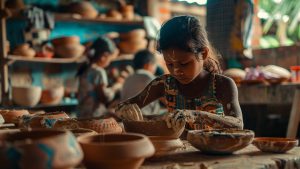 |
| Wood carvings | Gallery sculptures, furniture, décor items |  |
| Jewelry & beads | Contemporary jewelry for fashion and export | 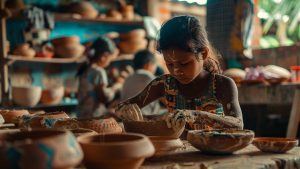 |
| Pottery & ceramics | Artistic ceramics for décor, galleries, export |
3.3 Benefits of Modernization
- Increases income generation for artisans.
- Expands international visibility and market access.
- Preserves cultural identity while promoting creative innovation.
- Globalization and International Collaboration
Rwanda’s craft sector can engage in global markets through:
- Trade fairs, international craft expos, and conferences like CILRAID 2026.
- Cultural exchange programs with foreign universities.
- International collaboration enhances standardization, design innovation, and professionalization.
Example: Participation in online marketplaces, international exhibitions, and design partnerships has increased demand for Rwandan crafts globally.
- Policy and Support Instruments
Government and NGOs provide frameworks to sustain craft industries:
- Training programs for artisans in entrepreneurship and digital skills.
- Support for cooperatives and SMEs.
- Policies for intellectual property, certification, and export facilitation.
Impact: These policies ensure crafts maintain cultural integrity while competing in modern markets.
- Conclusion
Craftsmanship in Rwanda is a dynamic blend of tradition and innovation. Preserving cultural heritage, fostering social cohesion, and embracing digital transformation allows Rwandan crafts to thrive locally and globally. International exposure, policy support, and innovative design are essential to sustainable development of the craft sector.
References
- Ministry of Youth and Culture, Rwanda. (2022). Rwandan Traditional Crafts Report. Kigali: Government Press.
- Nkurunziza, J. (2020). Craftsmanship and Socio-Economic Development in Rwanda. Journal of African Cultural Studies, 32(1), 45–63.
- UNESCO. (2019). Intangible Cultural Heritage: Rwanda Case Study. Paris: UNESCO Publishing.
- Opole University of Technology. (2025). CILRAID Conference Proceedings: Craft, Tradition, and Innovation. Opole, Poland.
- Rwanda Mart. (2025). Modern Craft Innovations in Rwanda. Kigali: Rwanda Mart Publications.